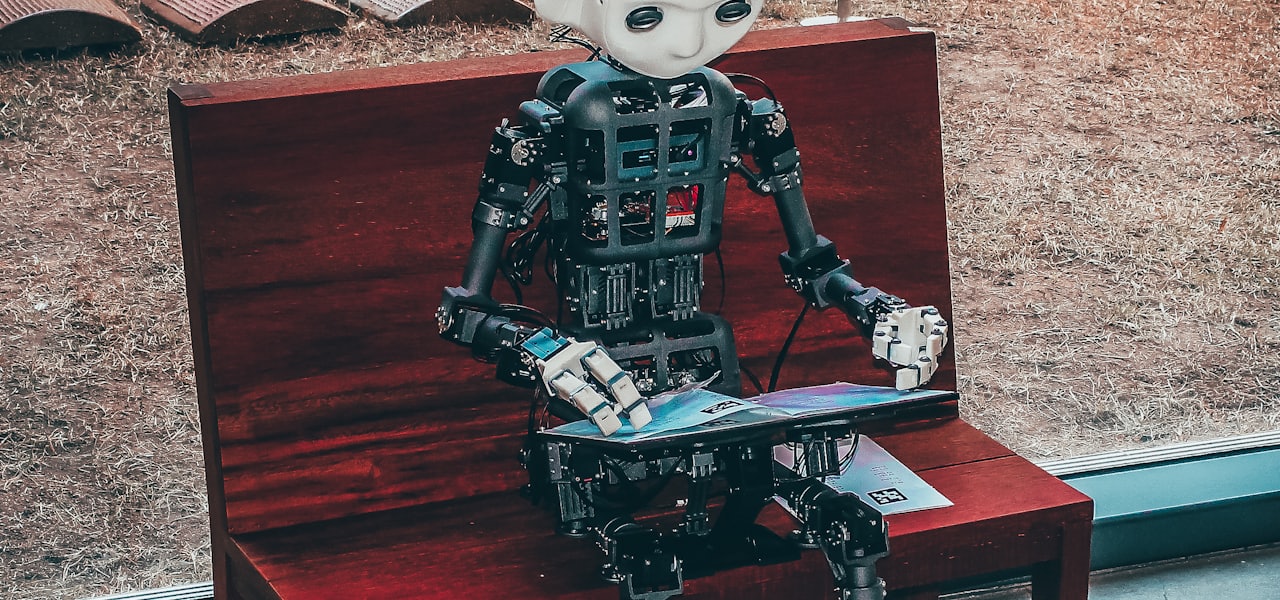
Artificial intelligence can be used to automate aspects of the job recruitment process. Advances in artificial intelligence, such as the advent of machine learning and the growth of big data, enable AI to be utilized to recruit, screen, and predict the success of applicants. Proponents of artificial intelligence in hiring claim it reduces bias, assists with finding qualified candidates, and frees up human resource workers' time for other tasks, while opponents worry that AI perpetuates inequalities in the workplace and will eliminate jobs. Despite the potential benefits, the ethical implications of AI in hiring remain a subject of debate, with concerns about algorithmic transparency, accountability, and the need for ongoing oversight to ensure fair and unbiased decision-making throughout the recruitment process. == Background == It is common for companies to use AI to automate aspects of their hiring process, especially the hospitality, finance, and tech industries. == Uses == === Screeners === Screeners are tests that allow companies to sift through a large applicant pool and extract applicants that have desirable features. What factors are used to screen applicants is a concern to ethicists and civil rights activists. A screener that favors people who have similar characteristics to those already employed at a company may perpetuate inequalities. For example, if a company that is predominantly white and male uses its employees' data to train its screener it may accidentally create a screening process that favors white, male applicants. The automation of screeners also has the potential to reduce biases. Biases against applicants with African American sounding names have been shown in multiple studies. An AI screener has the potential to limit human bias and error in the hiring process, allowing more minority applicants to be successful. === Recruitment === Recruitment involves the identification of potential applicants and the marketing of positions. AI is commonly utilized in the recruitment process because it can help boost the number of qualified applicants for positions. Companies are able to use AI to target their marketing to applicants who are likely to be good fits for a position. This often involves the use of social media sites advertising tools, which rely on AI. Facebook allows advertisers to target ads based on demographics, location, interests, behavior, and connections. Facebook also allows companies to target a "look-a-like" audience, that is the company supplies Facebook with a data set, typically the company's current employees, and Facebook will target the ad to profiles that are similar to the profiles in the data set. Additionally, job sites like Indeed, Glassdoor, and ZipRecruiter target job listings to applicants that have certain characteristics employers are looking for. Targeted advertising has many advantages for companies trying to recruit such being a more efficient use of resources, reaching a desired audience, and boosting qualified applicants. This has helped make it a mainstay in modern hiring. Who receives a targeted ad can be controversial. In hiring, the implications of targeted ads have to do with who is able to find out about and then apply to a position. Most targeted ad algorithms are proprietary information. Some platforms, like Facebook and Google, allow users to see why they were shown a specific ad, but users who do not receive the ad likely never know of its existence and also have no way of knowing why they were not shown the ad. === Interviews === Chatbots were one of the first applications of AI and are commonly used in the hiring process. Interviewees interact with chatbots to answer interview questions, and an analysis of their responses can be generated by AI. HireVue has created technology that analyzes interviewees' responses and gestures during recorded video interviews. Over 12 million interviewees have been screened by the more than 700 companies that utilize the service. == Controversies == Artificial intelligence in hiring confers many benefits, but it also has some challenges that have concerned experts. AI is only as good as the data it is using. Biases can inadvertently be baked into the data used in AI. Often companies will use data from their employees to decide what people to recruit or hire. This can perpetuate bias and lead to more homogenous workforces. Facebook Ads was an example of a platform that created such controversy for allowing business owners to specify what type of employee they are looking for. For example, job advertisements for nursing and teach could be set such that only women of a specific age group would see the advertisements. Facebook Ads has since then removed this function from its platform, citing the potential problems with the function in perpetuating biases and stereotypes against minorities. The growing use of Artificial Intelligence-enabled hiring systems has become an important component of modern talent hiring, particularly through social networks such as LinkedIn and Facebook. However, data overflow embedded in the hiring systems, based on Natural Language Processing (NLP) methods, may result in unconscious gender bias. Utilizing data driven methods may mitigate some bias generated from these systems It can also be hard to quantify what makes a good employee. This poses a challenge for training AI to predict which employees will be best. Commonly used metrics like performance reviews can be subjective and have been shown to favor white employees over black employees and men over women. Another challenge is the limited amount of available data. Employers only collect certain details about candidates during the initial stages of the hiring process. This requires AI to make determinations about candidates with very limited information to go off of. Additionally, many employers do not hire employees frequently and so have limited firm specific data to go off. To combat this, many firms will use algorithms and data from other firms in their industry. AI's reliance on applicant and current employees personal data raises privacy issues. These issues effect both the applicants and current employees, but also may have implications for third parties who are linked through social media to applicants or current employees. For example, a sweep of someone's social media will also show their friends and people they have tagged in photos or posts. == AI and the future of hiring == Artificial intelligence along with other technological advances such as improvements in robotics have placed 47% of jobs at risk of being eliminated in the near future. In 2016 the founder of the World Economic Forum, Klaus Schwab, called AI and related technology the "Fourth Industrial Revolution". According to some scholars, however, the transformative impact of AI on labor has been overstated. The "no-real-change" theory holds that an IT revolution has already occurred, but that the benefits of implementing new technologies does not outweigh the costs associated with adopting them. This theory claims that the result of the IT revolution is thus much less impactful than had originally been forecasted. Other scholars refute this theory claiming that AI has already led to significant job loss for unskilled labor and that it will eliminate middle skill and high skill jobs in the future. This position is based around the idea that AI is not yet a technology of general use and that any potential 4th industrial revolution has not fully occurred. A third theory holds that the effect of AI and other technological advances is too complicated to yet be understood. This theory is centered around the idea that while AI will likely eliminate jobs in the short term it will also likely increase the demand for other jobs. The question then becomes will the new jobs be accessible to people and will they emerge near when jobs are eliminated. == AI use in hiring for candidates == Job seekers now commonly encounter AI-driven tools at multiple stages, including automated resume parsing, video interview analysis, chatbots for frequently asked questions, and real‑time application updates. Some candidates also employ AI career agents, designed to optimize job searches, tailor applications, and interface with hiring teams. A 2025 Australian study found that AI-driven video interviews exhibited transcription error rates of up to 22% for non‑native speakers and those with speech-related disabilities, raising concerns of discrimination. A 2017 study in the Journal of Sociology found persistent gender and racial disparities in AI screening tools, even when fairness interventions are applied. Industry observers describe a growing “AI arms race” in recruitment, where both employers and candidates increasingly rely on automated agents. Employers use recruiting systems to source and filter applicants, while candidates deploy AI agents to prepare and submit applications. == Regulations == The Artifici
Topological deep learning
Topological deep learning (TDL) is a research field that extends deep learning to handle complex, non-Euclidean data structures. Traditional deep learning models, such as convolutional neural networks (CNNs) and recurrent neural networks (RNNs), excel in processing data on regular grids and sequences. However, scientific and real-world data often exhibit more intricate data domains encountered in scientific computations, including point clouds, meshes, time series, scalar fields graphs, or general topological spaces like simplicial complexes and CW complexes. TDL addresses this by incorporating topological concepts to process data with higher-order relationships, such as interactions among multiple entities and complex hierarchies. This approach leverages structures like simplicial complexes and hypergraphs to capture global dependencies and qualitative spatial properties, offering a more nuanced representation of data. TDL also encompasses methods from computational and algebraic topology that permit studying properties of neural networks and their training process, such as their predictive performance or generalization properties. The mathematical foundations of TDL are algebraic topology, differential topology, and geometric topology. Therefore, TDL can be generalized for data on differentiable manifolds, knots, links, tangles, curves, etc. == History and motivation == Traditional techniques from deep learning often operate under the assumption that a dataset is residing in a highly-structured space (like images, where convolutional neural networks exhibit outstanding performance over alternative methods) or a Euclidean space. The prevalence of new types of data, in particular graphs, meshes, and molecules, resulted in the development of new techniques, culminating in the field of geometric deep learning, which originally proposed a signal-processing perspective for treating such data types. While originally confined to graphs, where connectivity is defined based on nodes and edges, follow-up work extended concepts to a larger variety of data types, including simplicial complexes and CW complexes, with recent work proposing a unified perspective of message-passing on general combinatorial complexes. An independent perspective on different types of data originated from topological data analysis, which proposed a new framework for describing structural information of data, i.e., their "shape," that is inherently aware of multiple scales in data, ranging from local information to global information. While at first restricted to smaller datasets, subsequent work developed new descriptors that efficiently summarized topological information of datasets to make them available for traditional machine-learning techniques, such as support vector machines or random forests. Such descriptors ranged from new techniques for feature engineering over new ways of providing suitable coordinates for topological descriptors, or the creation of more efficient dissimilarity measures. Contemporary research in this field is largely concerned with either integrating information about the underlying data topology into existing deep-learning models or obtaining novel ways of training on topological domains. == Learning on topological spaces == One of the core concepts in topological deep learning is considering the domain upon which this data is defined and supported. In case of Euclidean data, such as images, this domain is a grid, upon which the pixel value of the image is supported. In a more general setting this domain might be a topological domain. Studying and developing deep learning models that are supported ln topological domains constitute the essence of topological deep learning. Next, we introduce the most common topological domains that are encountered in a deep learning setting. These domains include, but not limited to, graphs, simplicial complexes, cell complexes, combinatorial complexes and hypergraphs. Given a finite set S of abstract entities, a neighborhood function N {\displaystyle {\mathcal {N}}} on S is an assignment that attach to every point x {\displaystyle x} in S a subset of S or a relation. Such a function can be induced by equipping S with an auxiliary structure. Edges provide one way of defining relations among the entities of S. More specifically, edges in a graph allow one to define the notion of neighborhood using, for instance, the one hop neighborhood notion. Edges however, limited in their modeling capacity as they can only be used to model binary relations among entities of S since every edge is connected typically to two entities. In many applications, it is desirable to permit relations that incorporate more than two entities. The idea of using relations that involve more than two entities is central to topological domains. Such higher-order relations allow for a broader range of neighborhood functions to be defined on S to capture multi-way interactions among entities of S. Next we review the main properties, advantages, and disadvantages of some commonly studied topological domains in the context of deep learning, including (abstract) simplicial complexes, regular cell complexes, hypergraphs, and combinatorial complexes. ==== Comparisons among topological domains ==== Each of the enumerated topological domains has its own characteristics, advantages, and limitations: Simplicial complexes Simplest form of higher-order domains. Extensions of graph-based models. Admit hierarchical structures, making them suitable for various applications. Hodge theory can be naturally defined on simplicial complexes. Require relations to be subsets of larger relations, imposing constraints on the structure. Cell Complexes Generalize simplicial complexes. Provide more flexibility in defining higher-order relations. Each cell in a cell complex is homeomorphic to an open ball, attached together via attaching maps. Boundary cells of each cell in a cell complex are also cells in the complex. Represented combinatorially via incidence matrices. Hypergraphs Allow arbitrary set-type relations among entities. Relations are not imposed by other relations, providing more flexibility. Do not explicitly encode the dimension of cells or relations. Useful when relations in the data do not adhere to constraints imposed by other models like simplicial and cell complexes. Combinatorial Complexes : Generalize and bridge the gaps between simplicial complexes, cell complexes, and hypergraphs. Allow for hierarchical structures and set-type relations. Combine features of other complexes while providing more flexibility in modeling relations. Can be represented combinatorially, similar to cell complexes. ==== Hierarchical structure and set-type relations ==== The properties of simplicial complexes, cell complexes, and hypergraphs give rise to two main features of relations on higher-order domains, namely hierarchies of relations and set-type relations. ===== Rank function ===== A rank function on a higher-order domain X is an order-preserving function rk: X → Z, where rk(x) attaches a non-negative integer value to each relation x in X, preserving set inclusion in X. Cell and simplicial complexes are common examples of higher-order domains equipped with rank functions and therefore with hierarchies of relations. ===== Set-type relations ===== Relations in a higher-order domain are called set-type relations if the existence of a relation is not implied by another relation in the domain. Hypergraphs constitute examples of higher-order domains equipped with set-type relations. Given the modeling limitations of simplicial complexes, cell complexes, and hypergraphs, we develop the combinatorial complex, a higher-order domain that features both hierarchies of relations and set-type relations. The learning tasks in TDL can be broadly classified into three categories: Cell classification: Predict targets for each cell in a complex. Examples include triangular mesh segmentation, where the task is to predict the class of each face or edge in a given mesh. Complex classification: Predict targets for an entire complex. For example, predict the class of each input mesh. Cell prediction: Predict properties of cell-cell interactions in a complex, and in some cases, predict whether a cell exists in the complex. An example is the prediction of linkages among entities in hyperedges of a hypergraph. In practice, to perform the aforementioned tasks, deep learning models designed for specific topological spaces must be constructed and implemented. These models, known as topological neural networks, are tailored to operate effectively within these spaces. === Topological neural networks === Central to TDL are topological neural networks (TNNs), specialized architectures designed to operate on data structured in topological domains. Unlike traditional neural networks tailored for grid-like structures, TNNs are adept at handling more intricate data representations, such as graphs
Morphobank
MorphoBank is a web application for collaborative evolutionary research, specifically phylogenetic systematics or cladistics, on the phenotype. Historically, scientists conducting research on phylogenetic systematics have worked individually or in small groups employing traditional single-user software applications such as MacClade, Mesquite and Nexus Data Editor. As the hypotheses under study have grown more complex, large research teams have assembled to tackle the problem of discovering the Tree of Life for the estimated 4-100 million living species(Wilson 2003, pp. 77–80) and the many thousands more extinct species known from fossils. Because the phenotype is fundamentally visual, and as phenotype-based phylogenetic studies have continued to increase in size, it becomes important that observations be backed up by labeled images. Traditional desktop software applications currently in wide use do not provide robust support for team-based research or for image manipulation and storage. MorphoBank is a particularly important tool for the growing scientific field of phenomics. The development of MorphoBank, which began in 2001, has been funded by the National Science Foundation's Directorates for Geosciences, Biological Sciences and Computer and Information Science and Engineering. The significance of the scientific work on MorphoBank has been featured in the New York Times(here and here), among other publications. == Advantages == Teams of scientists studying phylogenetics to build the Tree of Life assemble large spreadsheets of observations about species (referred to as "matrices"). These teams require simultaneous access by each team member to a single and secure copy of the team's data during a scientific research project. This single copy of the data also changes with great frequency during the data collection phase. Images that can be very helpful for documenting homology statements must be displayed, labeled and shared as homology statements develop. This cannot be accomplished elegantly with a desktop software package alone because in a desktop environment each collaborator is working on his own private copy of project data. Changes made by one participant cannot automatically propagate to others, preventing collaborators from seeing each other's data edits until they are manually (and due to the effort involved, often only periodically) merged into a single "true" dataset. In all but the smallest and most disciplined of teams, file version control and the reconciliation of changes made on multiple copies of the data emerge quickly as significant drags on productivity. MorphoBank is an attempt to address these issues by leveraging the ubiquity of the web and modern web-based application techniques, including Ajax, web service layers, and rich web applications to provide a full-featured, net-accessible collaborative workspace for phylogenetic research. In particular, MorphoBank makes it easy to: Share all kinds of data with geographically separated team members, including taxonomy, character and specimen data, media (including images, video and audio), phylogenetic matrices (including data in the widely used NEXUS and TNT format) and other data such as documents and genetic sequences. Label high-resolution images using a web-based image annotation application. Collaboratively edit project data such as phylogenetic matrices using a built-in web-based matrix editor. The editor allows the linking of labeled images to individual cells of a matrix. Manage access to project data. Access ranges from full-access for team members to anonymous read-only access for potential reviewers. Publish completed project data on the web in support of a published paper with a persistent URL. Search The Encyclopedia of Life for taxon exemplar images. Store high resolution CT data Create ontologies for updating and populating matrix cells. These tasks are difficult or impossible in most existing software applications. == History == In 2001 the National Science Foundation (NSF) sponsored a workshop, at the American Museum of Natural History in New York to develop the outlines of a web-based system for a collaborative, media-rich research tool for morphological phylogenetics. An application prototype presented at the workshop was later refined with feedback from the workshop and became MorphoBank version 1.0. A grant from the US National Oceanic and Atmospheric Administration funded further revisions resulting in version 2.0, released in 2005. Current support from the NSF is funding current feature enhancements to MorphoBank. MorphoBank was hosted by Stony Brook University until late October 2021 and received back up support from the American Museum of Natural History. The current version is 3.0. Rationale for the software was described in the journal Cladistics. MorphoBank has also received support from NESCENT and the San Diego Supercomputer Center. Since 2018, MorphoBank has been supported in part by Phoenix Bioinformatics, a non-profit company founded to sustain databases for the basic sciences. A permanent move of MorphoBank from Stony Brook University to Phoenix Bioinformatics was complete in late October 2021. The San Diego Supercomputer Center has previously provided technical and hosting resources to the MorphoBank project. == Usage == MorphoBank hosts the products of peer-reviewed scientific research on phenotypes. An increasing volume of systematics data is "born digital" and MorphoBank is well suited to handle this type of material. On August 24, 2007, 62 active research projects were hosted by MorphoBank, as well as 6 completed (and published) projects. By 2017 over 2000 scientists and their students were registered content builders (users are not required to register and are even more numerous) and has more than 500 publicly available projects with approximately 80,000 images that are the products of scientific research. Over 1,500 active research projects are hosted by MorphoBank. The software has been used to assemble phylogenetic research on such groups as mammals, from bats to whales, bivalve molluscs, arachnids, fossil plants and living and extinct amniotes. It has also been used more broadly in evolutionary and paleontological research to host curated images associated with published research on lacewing insects geckos, raptor birds, dinosaurs, frogs and nematodes. MorphoBank is increasingly used in conjunction with the Paleobiology Database. Example published projects: Project 1097: Blank CE, 2013 Origin and early evolution of photosynthetic eukaryotes in freshwater environments – reinterpreting proterozoic paleobiology and biogeochemical processes in light of trait evolution Project 2520: Carvalho, T. P., R. E. Reis, and J. P. Friel, 2017 A new species of Hoplomyzon (Siluriformes: Aspredinidae) from Maracaibo Basin, Venezuela: osteological description using high-resolution Project 2651: Baron, M. G., Norman, D. B., Barrett, P. M., 2017 A new hypothesis of dinosaur relationships and early dinosaur evolution MorphoBank has been particularly important to the Assembling the Tree of Life initiative sponsored by the National Science Foundation. MorphoBank is well-suited to such projects because of its tools for merging taxonomic, character and matrix-based data, as well as its collaborative features. Highlights of this research include a collaborative matrix on mammal evolution published in Science that included over 4,000 phenomic characters scored for over 80 species, a matrix on extant baleen whales featuring nearly 600 images, and more.
List of performance analysis tools
This is a list of performance analysis tools for use in software development. == General purpose, language independent == The following tools work based on log files that can be generated from various systems. time (Unix) - can be used to determine the run time of a program, separately counting user time vs. system time, and CPU time vs. clock time. timem (Unix) - can be used to determine the wall-clock time, CPU time, and CPU utilization similar to time (Unix) but supports numerous extensions. Supports reporting peak resident set size, major and minor page faults, priority and voluntary context switches via getrusage. Supports sampling procfs on supporting systems to report metrics such as page-based resident set size, virtual memory size, read-bytes, and write-bytes, etc. Supports collecting hardware counters when built with PAPI support. == Multiple languages == The following tools work for multiple languages or binaries. == C and C++ == Arm MAP, a performance profiler supporting Linux platforms. AppDynamics, an application performance management service for C/C++ applications via SDK. AQtime Pro, a performance profiler and memory allocation debugger that can be integrated into Microsoft Visual Studio, and Embarcadero RAD Studio, or can run as a stand-alone application. IBM Rational Purify was a memory debugger allowing performance analysis. Instruments (bundled with Xcode) is used to profile an executable's memory allocations, time usage, filesystem activity, GPU activity etc. Intel Parallel Studio contains Intel VTune Amplifier, which tunes both serial and parallel programs. It also includes Intel Advisor and Intel Inspector. Intel Advisor optimizes vectorization (use of SIMD instructions) and prototypes threading implementations. Intel Inspector detects and debugs races, deadlocks and memory errors. Parasoft Insure++ provides a graphical tool that displays and animates memory allocations in real time to expose memory blowout, fragmentation, overuse, bottlenecks and leaks. Visual Studio Team System Profiler, commercial profiler by Microsoft. == Java == inspectIT is an open-source application performance management (APM) service for monitoring and analyzing software applications, available under the Apache License, Version 2.0 (ALv2). JConsole is the profiler which comes with the Java Development Kit JProfiler JRockit Mission Control, a profiler with low overhead. Netbeans Profiler, a profiler integrated into the NetBeans IDE (internally uses jvisualvm profiler) Plumbr, Java application performance monitoring with automated root cause detection. Links memory leaks, GC inefficiency, slow database and external web service calls, locked threads, and other performance problems to the line in source code that causes them. OverOps, Continuous reliability for the modern software supply chain, automatically detect and deliver root cause automation for all errors. VisualVM is a visual tool integrating several commandline JDK tools and lightweight profiling capabilities. It is bundled with the Java Development Kit since version 6, update 7. == JavaScript == The Firefox web browser's developer tools contain a Performance tool, which gives insight into JavaScript performance of a website. Microsoft Visual Studio AJAX Profiling Extensions is a free profiling tool for JavaScript by Microsoft Research. == .NET == CLR Profiler is a free memory profiler provided by Microsoft for CLR applications. GlowCode is a performance and memory profiler for .NET applications using C# and other .NET languages. It identifies time-intensive functions and detects memory leaks and errors in native, managed and mixed Windows x64 and x86 applications. Visual Studio == PHP == BlackFire.io Dbg Xdebug is a PHP extension which provides debugging and profiling capabilities.
Thai QR Payment
Thai QR Payment or PromptPay (พร้อมเพย์) is a real-time payment system in Thailand that allows money transfers through digital channels using identifiers linked to a bank account, including a mobile phone number, citizen identification number, tax identification number or bank account number. The system was introduced in 2016 as part of Thailand's national e-payment infrastructure and was developed under the National e-Payment Master Plan, a government programme intended to expand digital payment infrastructure and reduce the use of cash in everyday transactions. It is owned by National ITMX ltd and Bank of Thailand and developed by Vocalink, a group by Mastercard == History == PromptPay (originally AnyID) is one of the National e-Payment projects and policies by Thailand, to regulate and standardize electronic payments to follow the technologies with internet and smartphones that is expanding and bringing technology into Finance and Commerce. By 22 December 2015, The First Prayut cabinet have approved the project as a national infastructure PromptPay has also been used in cross-border payment linkages with other real-time payment systems in Southeast Asia. In April 2021, the Monetary Authority of Singapore and the Bank of Thailand launched a linkage between Singapore's PayNow and Thailand's PromptPay, allowing customers of participating banks to send money between the two countries using a mobile phone number. In June 2021, the central banks of Thailand and Malaysia launched a cross-border QR payment linkage between PromptPay and Malaysia's DuitNow system. == Services == PromptPay's Services have included Encrypted Transactions and Payment between Two Individuals (C2C) Government Infrastructure Payment Tax Returns Individual PromptPay e-Wallet Thai QR Payment Pay Alert e-Donation Cross Border QR Payment
Pandas (software)
Pandas (styled as pandas) is a software library written for the Python programming language for data manipulation and analysis. In particular, it offers data structures and operations for manipulating numerical tables and time series. It is free software released under the three-clause BSD license. The name is derived from the term "panel data", an econometrics term for data sets that include observations over multiple time periods for the same individuals, as well as a play on the phrase "Python data analysis". Wes McKinney started building what would become Pandas at AQR Capital while he was a researcher there from 2007 to 2010. The development of Pandas introduced into Python many comparable features of working with DataFrames that were established in the R programming language. The library is built upon another library, NumPy. == History == Developer Wes McKinney started working on Pandas in 2008 while at AQR Capital Management out of the need for a high performance, flexible tool to perform quantitative analysis on financial data. Before leaving AQR, he was able to convince management to allow him to open source the library in 2009. Another AQR employee, Chang She, joined the effort in 2012 as the second major contributor to the library. In 2015, Pandas signed on as a fiscally sponsored project of NumFOCUS, a 501(c)(3) nonprofit charity in the United States. == Data model == Pandas is built around data structures called Series and DataFrames. Data for these collections can be imported from various file formats such as comma-separated values, JSON, Parquet, SQL database tables or queries, and Microsoft Excel. === Series === A Series is a one-dimensional array-like object that stores a sequence of values together with an associated set of labels, called an index. It is built on top of NumPy's array and affords many similar functionalities, but instead of using implicit integer positions, a Series allows explicit index labels of many data types. A Series can be created from Python lists, dictionaries, or NumPy arrays. If no index is provided, pandas automatically assigns a default integer index ranging from 0 to n-1, where n is the number of items in the Series. A simple example with customized labels is: To access a value or list of values from a Series, use its index or list of indices: Series can be used arithmetically, as in the statement series_3 = series_1 + series_2. This will align data points with corresponding index values in series_1 and series_2 (similar to a join in relational algebra), then add them together to produce new values in series_3. A Series has various attributes, such as name (Series name), dtype (data type of values), shape (number of rows), values, and index. They can be used in many of the same operations as NumPy arrays, with additional methods for reindexing, label-based selection, and handling missing data. === DataFrame === A DataFrame is a two-dimensional, tabular data structure with labeled rows and columns. Each column is stored internally as a Series and may hold a different data type (numeric, string, boolean, etc.). DataFrames can be created by a variety of means, including dictionaries of lists, NumPy arrays, and external files such as CSV or Excel spreadsheets: To retrieve a DataFrame column as a Series, use either 1) the index (dict-like notation) or 2) the name of column if the name is a valid Python identifier (attribute-like access). DataFrames support operations such as column assignment, row and column deletion, label-based indexing with loc, position-based indexing with iloc, reshaping, grouping, and joining. Merge operations implement a subset of relational algebra and allow one-to-one, many-to-one, and many-to-many joins. Some common attributes of a DataFrame include dtypes (data type of each column), shape (dimensions of the DataFrame returned as a tuple with form (number of rows, number of columns)), index/columns (labels of the DataFrame's rows/columns, respectively, returned as an Index object), values (data in the DataFrame returned as a 2D array), and empty (returns True if the DataFrame is empty). === Index === Index objects hold metadata for Series and Dataframe objects, such as axis labels and names, and are automatically created from input data. By default, a pandas index is a series of integers ascending from 0, similar to the indices of Python arrays. However, indices can also use any NumPy data type, including floating point, timestamps, or strings. Indices are also immutable, which allows them to be safely shared across multiple objects. pandas' syntax for mapping index values to relevant data is the same syntax Python uses to map dictionary keys to values. For example, if s is a Series, s['a'] will return the data point at index a. Unlike dictionary keys, index values are not guaranteed to be unique. If a Series uses the index value a for multiple data points, then s['a'] will instead return a new Series containing all matching values. A DataFrame's column names are stored and implemented identically to an index. As such, a DataFrame can be thought of as having two indices: one column-based and one row-based. Because column names are stored as an index, these are not required to be unique. If data is a Series, then data['a'] returns all values with the index value of a. However, if data is a DataFrame, then data['a'] returns all values in the column(s) named a. To avoid this ambiguity, Pandas supports the syntax data.loc['a'] as an alternative way to filter using the index. Pandas also supports the syntax data.iloc[n], which always takes an integer n and returns the nth value, counting from 0. This allows a user to act as though the index is an array-like sequence of integers, regardless of how it is actually defined. pandas also supports hierarchical indices with multiple values per data point through the "MultiIndex" class. MultiIndex objects allow a single DataFrame to represent multiple dimensions, similar to a pivot table in Microsoft Excel, where each level can optionally carry its own unique name. In practice, data with more than 2 dimensions is often represented using DataFrames with hierarchical indices, instead of the higher-dimension Panel and Panel4D data structures. == Functionality == pandas supports a variety of indexing and subsetting techniques, allowing data to be selected by label, index, or Boolean conditions. For example, df[df['col1'] > 5] will return all rows in the DataFrame df for which the value of the column col1 exceeds 5. The library also implements grouping operations based on the split-apply-combine approach, enabling users to aggregate, transform, or restructure data according to column values or functions applied to index labels. For example, df['col1'].groupby(df['col2']) groups the data in 'col1' by their values in 'col2', while df.groupby(lambda i: i % 2) groups all data in the whole DataFrame by whether their index is even. The library also provides extensive tools for transforming, filtering and summarizing data. Users may apply arbitrary functions to Series and DataFrames, and because the library is built on top of Numpy, most NumPy functions can be applied directly to pandas objects as well. The library also includes built-in operations for arithmetic operations, string processing, and descriptive statistics such as mean, median, and standard deviation. These built-in functions are designed to handle missing data, usually represented by the floating-point value NaN. In addition, pandas includes tools for reorganizing data into different structural formats, with methods that can reshape tabular data between "wide" and "long" formats and pivot values based on column labels. pandas also implements a flexible set of relational operations for combining datasets. For instance, merge() links row in DataFrames based on one or more shared keys or indices, supporting one-to-one, one-to-many, and many-to-many relationships in a manner analogous to join operations in relational databases like SQL. DataFrames can also be concatenated or stacked together along an axis through the concat() method, and overlapping data can be further spliced together using combine_first() to fill in missing values. Furthermore, the library includes specialized support for working with time-series data. Features include the ability to interpolate values and filter using a range of timestamps, such as data['1/1/2023':'2/2/2023'] , which will return all dates between January 1 and February 2. Missing values in time-series data are represented by a dedicated NaT (Not a Timestamp) object, instead of the NaN value it uses elsewhere. == Criticisms == Pandas has been criticized for its inefficiency. The entire dataset must be loaded in RAM, and the library does not optimize query plans or support parallel computing across multiple cores. Wes McKinney, the creator of Pandas, has recommended Apache Arrow as an alternative to address these performance concerns and ot
GazoPa
GazoPa was an image search engine that used features from an image to search for and identify similar images which closed in 2011. GazoPa began in TechCrunch50 in 2008 before launching into a state of open beta in 2009. GazoPa branched out and released a flower photo community site called "GazoPa Bloom" in 2010. This site was for exploring flower images and, if users need help identifying a flower, uploading images for other people try to identify them. Both sites closed to the public in 2011 when the company decided to focus on other areas of their business.